Dissertation Research Toolkit: The Ultimate Guide to Completing Your Dissertation Faster
Completing a dissertation is one of the most challenging academic tasks a student will face. It requires not only strong research skills but also excellent planning, organization, and writing ability. The good news is that you don’t have to do it alone. A dissertation research toolkit is designed to simplify every stage of the dissertation process, from selecting a topic to writing the final draft.
In this guide, we’ll walk you through what a dissertation research toolkit is, why you need it, what it should include, and how to use it to finish your dissertation faster and with better results.
What Is a Dissertation Research Toolkit?
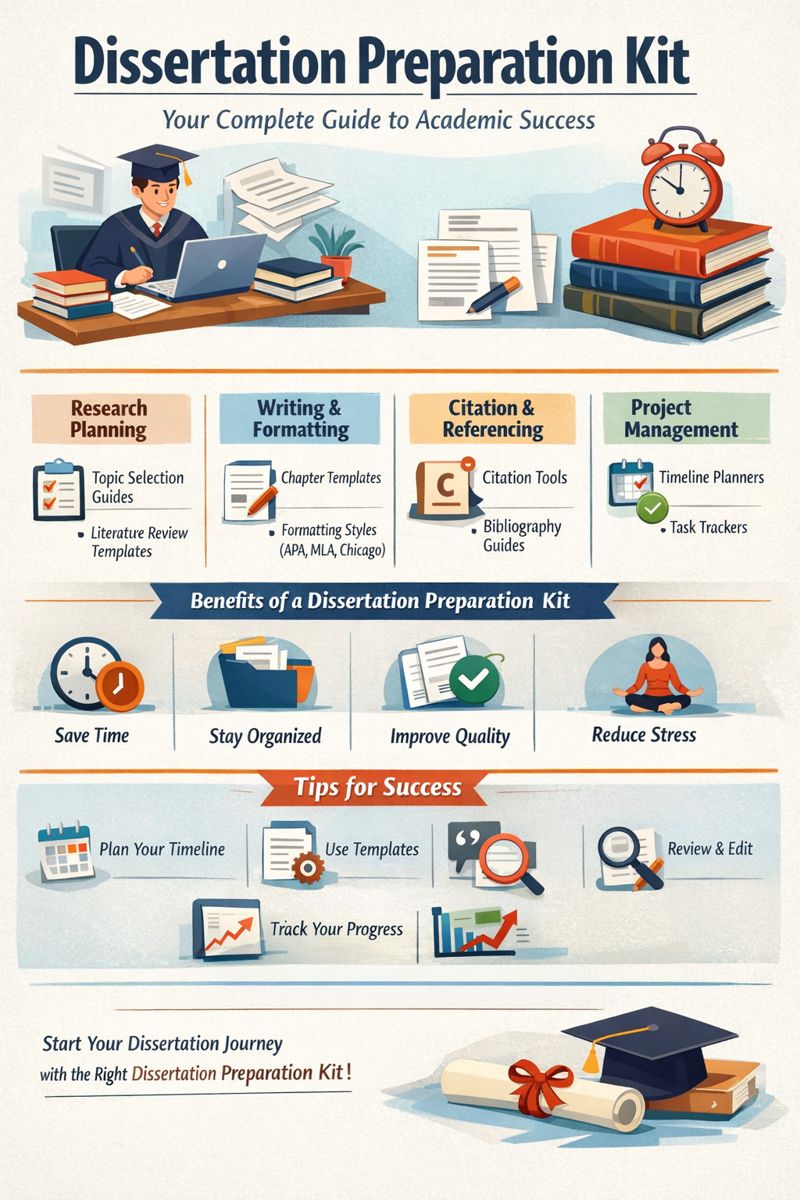
A dissertation research toolkit is a collection of resources, templates, and tools that support you throughout the research process. Think of it as a roadmap that keeps you organized, motivated, and on track. Instead of spending hours trying to figure out what to do next, you can use the toolkit to follow a proven structure that ensures your dissertation meets academic standards.
A toolkit may include:
Research planning templates
Literature review tools
Methodology and data collection guides
Writing templates and chapter outlines
Time management trackers
This toolkit is especially useful for master’s and doctoral students who are juggling research with work, family, or other commitments.
Why You Need a Dissertation Research Toolkit
Many students struggle with dissertation research because it can feel overwhelming. You may not know where to start, or you may get stuck in the middle of the process. A dissertation research toolkit solves this problem by providing a structured framework.
Here are the top reasons you need a toolkit:
1. It Helps You Start Strong
The beginning of your dissertation is critical. A toolkit helps you choose a research topic, develop research questions, and plan your study correctly.
2. It Keeps You Organized
Dissertation research involves numerous documents, sources, and data. Without proper organization, you may lose important information or waste time searching for notes.
3. It Improves Your Research Quality
A toolkit provides proven strategies for literature review, methodology design, and data analysis. This helps you produce high-quality research that meets academic standards.
4. It Saves Time
With templates and checklists, you can avoid repeating mistakes and spend more time on writing and analysis.
5. It Reduces Stress
Knowing what to do next reduces anxiety and helps you stay motivated throughout the process.
Key Components of a Dissertation Research Toolkit
A strong dissertation research toolkit should cover every stage of the dissertation process. Below are the key components you should include:
1. Topic Selection & Research Question Planner
Choosing a dissertation topic is one of the hardest steps. A toolkit should include:
Topic brainstorming worksheets
Topic evaluation checklists
Research question templates
Feasibility assessment forms
These tools help you choose a topic that is both interesting and researchable. They also help you narrow your focus to a manageable scope.
2. Literature Review Templates
The literature review is a major part of your dissertation. It requires you to read, evaluate, and summarize academic sources. A toolkit should include:
Literature review matrix
Source evaluation checklist
Citation and referencing templates
Literature gap analysis worksheets
These tools help you build a strong foundation for your research and ensure your review is thorough and well-structured.
3. Research Design & Methodology Guides
Your dissertation must have a clear research design and methodology. A toolkit should include:
Research design templates
Methodology statement templates
Sample data collection plans
Ethical approval forms and guidelines
These tools ensure you choose the right methods and justify your approach clearly.
4. Data Collection & Analysis Tools
Whether you’re conducting interviews, surveys, or experiments, data collection can be complex. A toolkit should include:
Survey templates
Interview guides
Data coding and analysis worksheets
Data interpretation frameworks
These tools help you collect reliable data and analyze it effectively.
5. Writing Templates & Chapter Outlines
Writing a dissertation can feel like writing a book. A toolkit should include:
Chapter outlines
Writing checklists
Formatting guides
Sample dissertation chapters
These tools help you write faster and maintain consistency throughout your work.
6. Project Management & Time Tracking
A dissertation is a long-term project. You need to manage your time and set realistic milestones. A toolkit should include:
Gantt chart templates
Weekly progress planners
Milestone trackers
Deadline reminders
These tools help you stay on track and meet submission deadlines.
How to Use a Dissertation Research Toolkit (Step-by-Step)
A toolkit is only effective if you use it correctly. Here is a step-by-step guide to using your dissertation research toolkit:
Step 1: Start with a Clear Topic
Use the topic planner to generate ideas and narrow down your focus. Your topic should be relevant, researchable, and aligned with your academic goals.
Step 2: Develop Strong Research Questions
Use the research question templates to create questions that are clear and measurable. Your questions should guide your research and define the scope of your study.
Step 3: Conduct a Comprehensive Literature Review
Use the literature review matrix to organize your sources and identify gaps in existing research. Your literature review should justify the need for your study.
Step 4: Choose the Right Research Design
Use the methodology guides to choose the best research approach. Whether you choose qualitative, quantitative, or mixed methods, your design should align with your research questions.
Step 5: Collect and Analyze Data
Use the data collection tools to gather information and the analysis tools to interpret your findings. Your data should support your research questions and lead to meaningful conclusions.
Step 6: Write and Format Your Dissertation
Use the writing templates and chapter outlines to structure your dissertation. Follow formatting guidelines to ensure your dissertation meets university requirements.
Step 7: Review, Edit, and Finalize
Use the final review checklist to ensure your dissertation is polished and error-free. This step includes proofreading, formatting, and checking citations.
Common Mistakes to Avoid During Dissertation Research
Even with a toolkit, students often make mistakes. Here are some common errors and how to avoid them:
❌ Mistake 1: Choosing a Topic That Is Too Broad
A broad topic can make your research unfocused. Use the toolkit to narrow your topic to a manageable scope.
❌ Mistake 2: Ignoring the Literature Review
The literature review is essential for proving your research’s relevance. Use the literature review tools to stay organized.
❌ Mistake 3: Weak Research Questions
Your research questions guide your entire dissertation. Use templates to develop strong, clear questions.
❌ Mistake 4: Poor Time Management
Many students fall behind due to poor planning. Use the project tracker to set realistic milestones.
❌ Mistake 5: Not Seeking Feedback
Feedback from your supervisor or peers can improve your work. Use your toolkit to plan review sessions.
Who Should Use a Dissertation Research Toolkit?
A dissertation research toolkit is ideal for:
Master’s students working on a thesis
PhD candidates writing their dissertation
Professionals pursuing research degrees
Anyone writing a research project or academic paper
If you want a structured, stress-free approach to dissertation research, this toolkit is perfect for you.
Final Thoughts: The Best Investment for Your Dissertation Success
A dissertation research toolkit is more than a set of templates—it’s a roadmap to success. It helps you stay organized, manage time, and produce high-quality research. Whether you are just starting or are already deep into your dissertation, this toolkit can help you finish faster and with confidence.
If you want to reduce stress and improve the quality of your dissertation, the dissertation research toolkit is the best investment you can make.